Monday, January 30, 2017

Abstract Paintings inspired by Joan Miro


Third and fourth grade artists learned about Spanish artist Joan Miro.  We looked at examples of his work and identified the types of shapes, lines, colors and textures he used most frequently in his paintings.


Here are paintings made by third and fourth graders.  They worked in layers over several art classes. These paintings are on large paper. 

I should note that students photographed their own artwork using iPads and edited the photos for the best results.  This ties into our "Presenting" National Core Art Standard.


File_000.jpegFile_000.jpegFile_000.jpegFile_001.jpegFile_001.jpegFile_001.jpegFile_002.jpegFile_002.jpegFile_002.jpegFile_003.jpegFile_003.jpegFile_003.jpegFile_004.jpegFile_004.jpegFile_004.jpegFile_005.jpegFile_005.jpegFile_007.jpegFile_005.jpegFile_006.jpegFile_006.jpegFile_007.jpegFile_007.jpegFile_008.jpegFile_008.jpegFile_008.jpegFile_009.jpegFile_009.jpeg

Wednesday, January 25, 2017

Rainbow Week!

Our Amazing School Chef has started the fun tradition of Rainbow Week at the Fayston School. Each day the school lunch is based on one color of the rainbow and students wear that color. We have been working on Rainbow week art lessons, including a collaborative Color Wheel Collage Mural and Gelli Printing.

A photo posted by Nora (@artclass_allday) on


A photo posted by Nora (@artclass_allday) on


I found this fascinating infographic about the meanings of different colors around the world. Take a look!
http://brandongaille.com/wp-content/uploads/2014/01/What-Colors-Mean.jpg

Wednesday, January 4, 2017

Wednesday, December 21, 2016

Portraits inspired by Sandra Silberzweig


Sandra Silberzweig is a contemporary artist from Toronto. She has a condition called synesthesia, which is a crossing of the senses.  This means that she may "hear" colors or "see" music.

Here is a poem she wrote called "When you are a synesthesia goddess ...... your day dreams are always in color"
I am a synesthesia goddess
I have no fear of color
It lives in my soul, dances in my heart
Spills out of my fingers flowing down a canvas
I can see your aura
Taste the color black
Feel the chill of the green wind
Smell blue butterflies
Hear the yellow rain
Life is never boring when inspiration is always around


Click here to read more about Sandra Silberzweig, the work she has done to share her experience with synesthesia and how she has turned this condition into a driving force for her creative work.


Silberzweig's paintings are bold, colorful and imaginative.  She primarily paints stylized, patterned-filled portraits. 

I worked with the third and fourth grade classes to create an assessment rubric for this lesson. We talked about what qualities artwork would need to get into the "Wowy-Zowy Zone." Students used this rubric to inspire revisions of their work and self-evaluate.  Click here to view this rubric.


Third and fourth grade artists looked at examples of Silberzweig's artwork, then created portraits inspired by her unique style.  We used chalk pastel and oil pastel and focused on choosing warm and cool color combinations and creating patterns.
File_000.jpegFile_000.jpegFile_000.jpegFile_001.jpegFile_001.jpegFile_002.jpegFile_002.jpegFile_002.jpegFile_002.jpegFile_002.jpegFile_003.jpegFile_003.jpegFile_003.jpegFile_004.jpegFile_003.jpegFile_004.jpegFile_004.jpegFile_005.jpegFile_005.jpegFile_005.jpegFile_006.jpegFile_006.jpegFile_006.jpegFile_007.jpegFile_008.jpegFile_008.jpegFile_008.jpegFile_009.jpegFile_009.jpegFile_009.jpegFile_009.jpeg

Wednesday, December 14, 2016

Cardinal Collages inspired by Charley Harper

 
I've always loved Charley Harper's bright and bold images, particularly those of birds.  When the cardinals arrive against the gray winter days of December, I find myself especially drawn to Harper's images of cardinals.  

Third and fourth grade artists looked at Harper's work and identified the simple shapes he used to create his birds. We used colored paper to capture the cardinal in all four seasons.

Monday, November 28, 2016

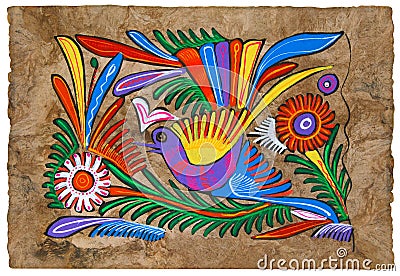
Mexican Folk Art Amate Paintings

Amate paintings are a traditional art of the Mezcala region of Mexico.  Amate refers to the type of paper the paintings are done on. It is made from processed tree bark that is boiled, sometimes dyed or bleached and pressed into paper. Amate paper was traditionally used to record data, pass along communication or for ritual purposes. Today it is used to create decorative art that the artists sell to support themselves and their families.


First and second graders watched this video about making Amate paper. We discussed reasons for making art and how an artist chooses the subject or his or her artwork.  We planned Amate-inspired drawings featuring colorful birds, other animals, flowers and plants.  We will paint them with brightly colored paints.

Wednesday, November 9, 2016

Kindergarten Transportation Collages

Kindergarten Artists listened to "The Transportation Song" (see below). Then we looked at several of our favorite books about trucks, cars, construction vehicles and more. These inspired our colorful vehicle collages.

Tuesday, November 8, 2016

Faux Leaves Stained Glass by Grade Three & Four

Third and fourth grade artists looked at several examples of leaf artwork, including Georgia O'Keeffe. We also examined  Stained Glass Windows by Louis Comfort Tiffany.  Then we went outside to collect fallen leaves to inspire our work.  Artists traced their leaves on the paper to create a balanced composition. Then they traced their lines with black glue (glue+black tempera paint). When the glue dried (into a giant black puddle on my art room floor... oops!), they used warm and cool color groups to paint their leaves and backgrounds. We used liquid watercolors.


 Stained Glass window by Louis C. Tiffany and Leaves by Georgia O'Keeffe.

This lesson was inspired by Crayola Lessons