Showing posts with label World Cultures. Show all posts

Monday, May 21, 2018

Painted Indian Elephants

Third and fourth graders were studying India in their classroom and were learning about the different festivals and holidays.  The tradition of painting elephants for the Elephant Festival in Jaipur was particularly interesting to students. We looked at many images, including photographs from this National Geographic article.  Artists filled their painted elephants with as many different patterns and colors as possible using Sharpie markers, liquid watercolor paint and Crayola construction paper crayons.


Wednesday, October 11, 2017

Diwali! The Festival of Lights!

Join us to celebrate Diwali, The Festival of Lights! Next Wednesday, October 18th, we will gather as a whole school to enjoy a special Diwali luncheon.  Students at all levels have learned about this festival and created artwork and helped prepare food for this festival. 


Here's some information about Diwali from kidzworld.com :
Many people immediately think of Halloween and Christmas when it comes to winter holidays, but in Hindu culture there’s another major winter holiday that can’t be missed – Diwali. Diwali is also known as the festival of lights, and is celebrated by millions of people around the world. This year it falls on October 19th 2017. Find out more in All About Diwali!
Diwali originated in India as a celebration of light, in fact the world Diwali comes from “deepavali”, meaning “row of lamps.” It is traditionally celebrated by Hindus, Jains, Buddhists and Sikhs,  although over the years it has been incorporated into many different cultures around the world. It is known as the festival of lights because in celebration people light many small clay lamps called "diyas" around their homes to represent the victory of good over evil and to invite good luck and prosperity from the Hindu Goddess Lakshmi and the God Ganesh, who represents good luck, wealth and enlightenment.


Kindergarten and first grade artists are making "Diyas," the small clay candle holders that are placed around homes during Diwali to celebrate the triumph of light over darkness. 

Third and fourth grade artists created sand Rangoli designs. Rangolis are generally circular mandala designs that are created using colored sand, rice or chalk on the ground outside of homes as a sign of welcoming. We also painted large Rangoli designs on paper with watercolor paints.  We learned about radial symmetry. 


A post shared by Nora (@artclass_allday) on


Fifth and sixth grade artists looked specifically at Rangoli designs that feature peacocks.  The Peacock is a symbol of beauty, glory and refinement.  We used chalk and oil pastels on construction paper. 


Monday, November 28, 2016

Mexican Folk Art Amate Paintings

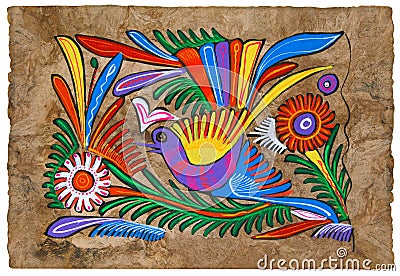
Amate paintings are a traditional art of the Mezcala region of Mexico.  Amate refers to the type of paper the paintings are done on. It is made from processed tree bark that is boiled, sometimes dyed or bleached and pressed into paper. Amate paper was traditionally used to record data, pass along communication or for ritual purposes. Today it is used to create decorative art that the artists sell to support themselves and their families.


First and second graders watched this video about making Amate paper. We discussed reasons for making art and how an artist chooses the subject or his or her artwork.  We planned Amate-inspired drawings featuring colorful birds, other animals, flowers and plants.  We will paint them with brightly colored paints.

Monday, October 31, 2016

Day of the Dead Sugar Skulls

Fifth and sixth grade artists learned about the Day of the Dead and the tradition of making intricately decorated Sugar Skulls.  They used Sharpie Markers and colored pencil to create these unique Sugar Skulls.


Monday, June 8, 2015

Mexican Sun Metal Tooling

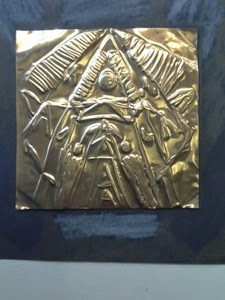
Here are our Mexican Metal tooling suns by grades one and two: 


First and second graders looked at examples of Mexican Folk Art Suns.  This image stems from the Aztec culture, which revered the Sun God Tonatiuh as the leader of heaven.  Now it is a common theme throughout Mexican folk art.  First and second graders used these images to inspire their own sun faces, then transferred their drawings onto thin sheets of metal.  Metal tooling is a traditional Mexican folk art, so we used this technique to make brilliant sun faces. 

Monday, October 6, 2014

Mid-Autumn Moon Festival Luncheon

Thank you to all who attended and helped with set up and clean up of our first ever Mid-Autumn Moon Festival lunch at Fayston School!  Thank you to Cheryl for a delicious meal! 

Tuesday, September 23, 2014

Mid-Autumn Moon Festival

Fayston School celebrates
The Mid-Autumn Moon Festival
Monday, October 6th, 2014


Join us to give thanks, honor the full moon and celebrate the harvest with a special picnic lunch shared with friends and family.
Adult lunch $3.75
R.S.V.P. to cjoslin@wwsu.org
11:30 grades K-3 / 12:00 grades 4-6

The Mid-Autumn Moon Festival is a Harvest and Thanksgiving Festival celebrated in China, Vietnam, Taiwan and other Asian countries.  It takes place during the full moon in September or October.
During this festival, people gather with their families and friends, offer thanks for the harvest or other good fortune and send their wishes and prayers to the moon.  Other traditions include an outdoor nighttime picnic, with special treats called Mooncakes, and other traditional foods.  At the gathering, people display colorful lanterns to light up the night.

At the Fayston School, we will celebrate the Mid-Autumn Moon Festival on Monday, October 6.  Students will read Thanking the Moon, by Maya Lin, to learn about the Mid-Autumn Moon Festival and prepare for this event.

MENU
Potstickers with Stir-Fried Vegetables
Mooncakes
Sesame Noodles
Fortune cookies
Pears and Grapefruit
Tea


Wednesday, September 17, 2014

Mandalas!

In celebration of International Dot Day, all classes will create different types of "Dot Art."  Fifth and sixth grade artists will create circular artwork called Mandalas.  

Mandalas are created in many cultures as a support for meditation.  They can be drawings or painted or made from sand.  

What is a Mandala?

The word "mandala" is from the classical Indian language of Sanskrit. Loosely translated to mean "circle," a mandala is far more than a simple shape. It represents wholeness, and can be seen as a model for the organizational structure of life itself--a cosmic diagram that reminds us of our relation to the infinite, the world that extends both beyond and within our bodies and minds.
Describing both material and non-material realities, the mandala appears in all aspects of life: the celestial circles we call earth, sun, and moon, as well as conceptual circles of friends, family, and community.

Mandalas have Radial Symmetry:  the condition of having similar parts regularly arranged around a central axis 


Examples of Mandalas:

How to Grow a Mandala Video:


Video of the Dali Lama creating a Sand Mandala


Monday, April 28, 2014

Illuminated Letters inspired by the Books of Kells

Illuminated Letters from The Book of Kells


The Book of Kells is a stunningly beautiful manuscript containing the Four Gospels. It is Ireland's most precious medieval artifact, and is generally considered the finest surviving illuminated manuscript to have been produced in medieval Europe.

Origins and History:


The Book of Kells was probably produced in a monastery on the Isle of Iona, Scotland, to honor Saint Columba in the early 8th century. After a Viking raid the book was moved to Kells, Ireland, sometime in the 9th century. It was stolen in the 11th century, at which time its cover was torn off and it was thrown into a ditch. The cover, which most likely included gold and gems, has never been found, and the book suffered some water damage; but otherwise it is extraordinarily well-preserved.
In 1541, at the height of the English Reformation, the book was taken by the Roman Catholic Church for safekeeping. It was returned to Ireland in the 17th century, and Archbishop James Ussher gave it to Trinity College, Dublin, where it resides today.

Construction:

The Book of Kells was written on vellum (calfskin), which was time-consuming to prepare properly but made for an excellent, smooth writing surface. 680 individual pages (340 folios) have survived, and of them only two lack any form of artistic ornamentation. In addition to incidental character illuminations, there are entire pages that are primarily decoration, including portrait pages, "carpet" pages and partially decorated pages with only a line or so of text.
As many as ten different colors were used in the illuminations, some of them rare and expensive dyes that had to be imported from the continent. The workmanship is so fine that some of the details can only be clearly seen with a magnifying glass.


 Click here to read more about the Book of Kells      

Third and fourth grade artists looked at examples of illuminated letters from the Book of Kells and practiced drawing Celtic knots.  Each student chose a letter to illuminate, then transferred the image onto gold metal foil.