Thursday, March 29, 2012

Empty Bowls with Leslie Montalto

How to make a Slab Bowl:
Roll out a slab of clay

Add texture

Lots of texture! 

Lay over a bowl mold

Trim and smooth edges


Tuesday, March 27, 2012

Empty Bowls Project is Underway!

Monday was our first day with our guest artist Leslie Montalto!  She spent the day with art classes making textured slab bowls and demonstrating the potter's wheel. What a success!

The bowls will be used at our Empty Bowls dinner on Thursday, May 10 at Sugarbush's Gatehouse Lodge.  Students will help make food from countries around the world that experience a high rate of undernutrition.

Tuesday, March 20, 2012

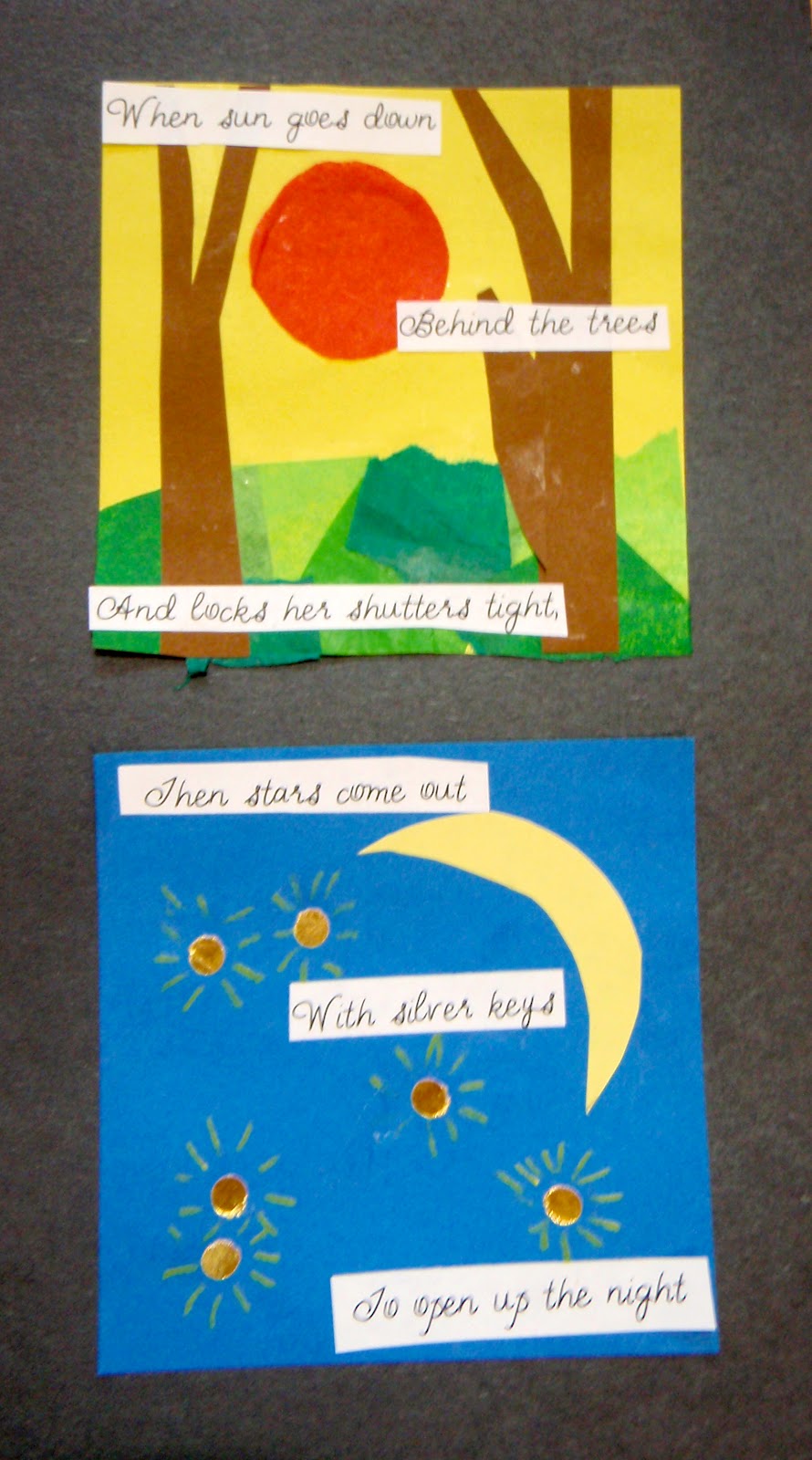
When Sun Goes Down Behind the Trees....


Taking Turns
by Norma Farber
When sun goes home 
Behind the trees, 
And locks her shutters tight—
Then stars come out 
with silver keys 
to open up the night.

Pre-K artists read "Taking Turns," by Norma Farber.  They used colored paper, tissue paper and a copy of the poem to create a pair of small collages that illustrate this poem.


my example:

Monday, March 12, 2012

Empty Bowls Project at Fayston School

Empty Bowls is an international grassroots effort created to help fight hunger and spread awareness about food insecurity.  Although each group’s Empty Bowls project looks a bit different, the basic premise is simple.  Participants work with potters to create handcrafted ceramic bowls.  The community is invited to a simple meal and in exchange for a cash donation, guests may keep a ceramic bowl as a reminder of the many empty bowls in the world.  Funds raised from the event are donated to an organization that works to alleviate hunger. 

Click here to learn more about Empty Bowls.


Fayston Elementary School has received a grant from the Vermont Principals Association to implement an Empty Bowls Service Learning project in the early part of 2012.  Fayston students will work with local potter Leslie Montalto to create ceramic bowls with handbuilding and on the potter’s wheel.  Additionally, they will learn about many aspects of food insecurity and hunger prevention efforts in their community and beyond.  Over the course of the project, students will work to create products that demonstrate their knowledge, specifically drawing upon the many technology resources that are available and incorporating learning in many disciplines.  

We will host an Empty Bowls dinner at Sugarbush Resort on Thursday, May 10 from 5:30-7:30.  This event will showcase student work and learning during this project and feature an exciting meal of food from various countries that experience high percentages of food insecurity.   

We are still looking for parent volunteers to help with the bowls and also to help with the final event.  Please contact Nora or your child's classroom teacher if you are able to help!  

Thursday, March 8, 2012

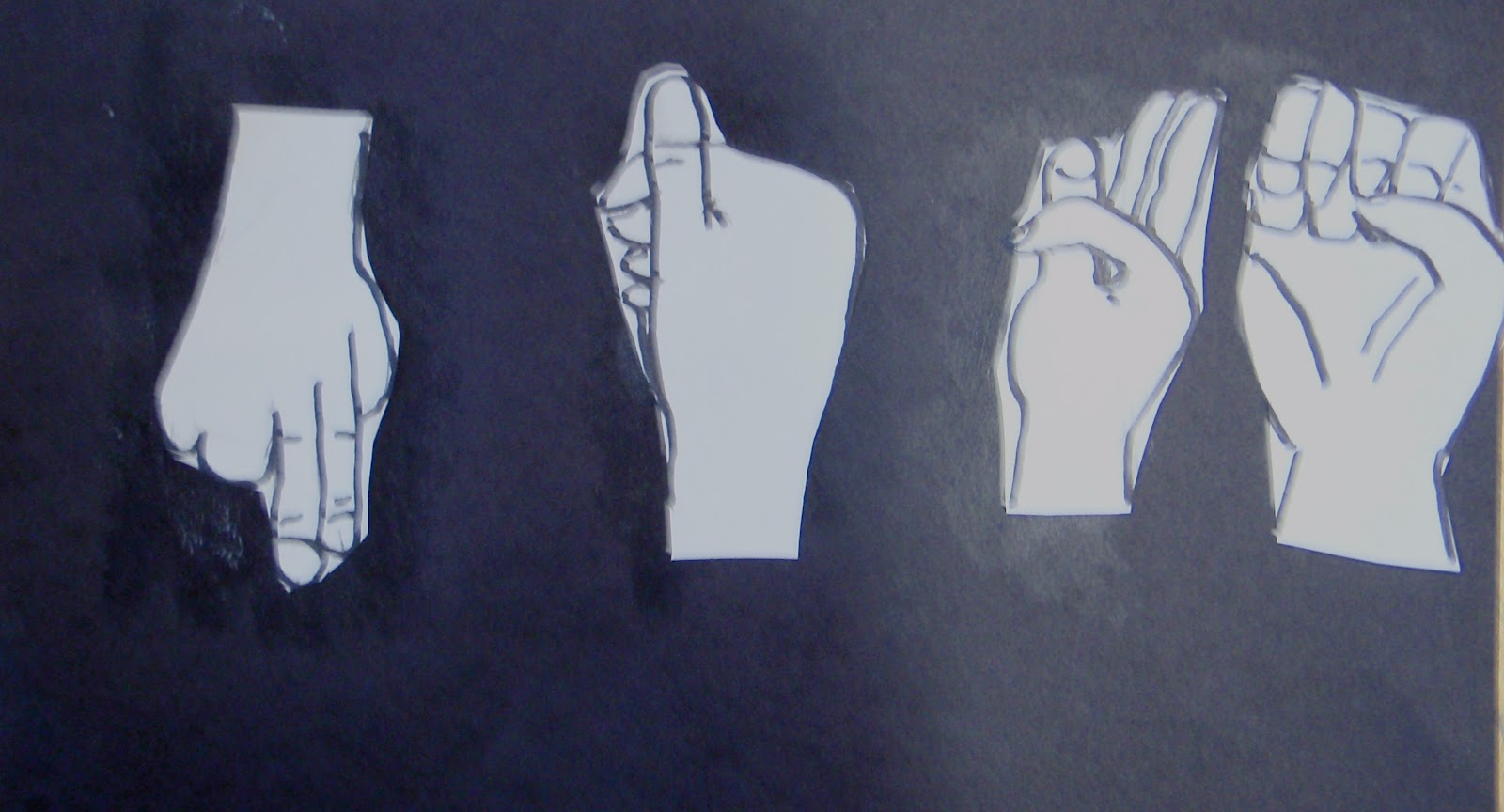
Sign Language Hands

Fifth and Sixth grade artists are practicing drawing from life skills by drawing their hands.  In order to make this project more interesting, students are drawing their hands as they form the letters of their first names using American Sign Language.


Architecture inspired by Dr. Seuss


Classic Children's Books

In celebration of "I Love to Read and Write Month" (February), fifth and sixth graders used enlarging techniques to create large versions of the covers of their favorite classic children's stories.  We transferred the cover images and lettering onto big paper using a grid, then outlined with Sharpie markers and painted with tempera cakes.  Some students added silver or gold Caldecott medals or other honors to their book covers with shiny paper.


Friday, February 10, 2012

10 Lessons that Art Teaches

Written by Elliot Eisner, an ardent arts advocate, I originally found this from  the April 2011 issue of Arts & Activities magazine.    It's a short, succinct argument for the importance of art in education. Here it is:


1. The arts teach children to make good judgments about qualitative relationships.Unlike much of the curriculum in which correct answers and rules prevail, in the arts, it
is judgment rather than rules that prevail.
2. The arts teach children that problems can have more than one solutionand that questions can have more than one answer.
3. The arts celebrate multiple perspectives.One of their large lessons is that there are many ways to see and interpret the world.
4. The arts teach children that in complex forms of problem solving
purposes are seldom fixed, but change with circumstance and opportunity. 
Learning in the arts requires the ability and a willingness to surrender to the unanticipated possibilities of the work as it unfolds.
5. The arts make vivid the fact that neither words in their literal form nor numbers exhaust what we can know. The limits of our language do not define the limits of our cognition.
6. The arts teach students that small differences can have large effects.The arts traffic in subtleties.
7. The arts teach students to think through and within a material.All art forms employ some means through which images become real.
8. The arts help children learn to say what cannot be said.When children are invited to disclose what a work of art helps them feel, they must reach into their poetic capacities to find the words that will do the job.
9. The arts enable us to have experience we can have from no other source and through such experience to discover the range and variety of what we are capable of feeling.
10. The arts' position in the school curriculum symbolizes to the young
what adults believe is important.